
DeepDive
Dive deeper
In-depth articles on industries, product groups, systems, data model, standards and implementation of the Digital Product Passport.
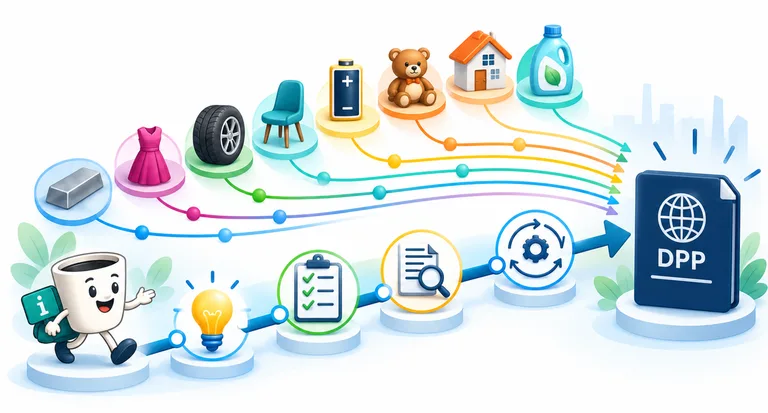
Industries
Which industries will be required to use a DPP — and which information will become important when?
The Digital Product Passport is being introduced step by step. Find out which product groups will be affected first and which information will become important for companies, from initial orientation through implementation.
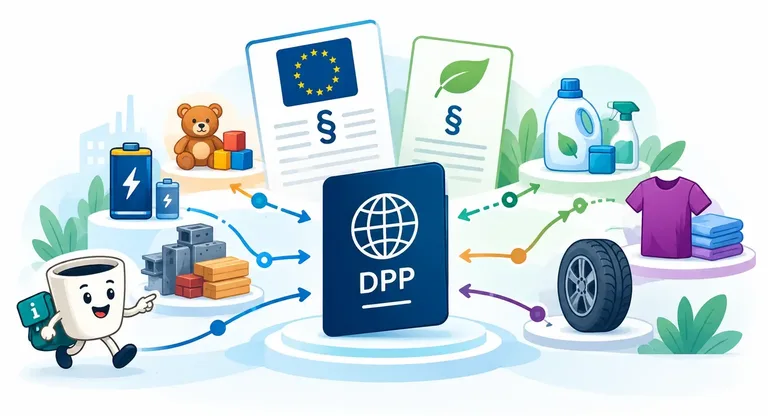
Product groups
Which DPP requirements apply to which product groups?
Which DPP requirements apply to which product groups — and where are they set out today? This deep dive shows what has already been established for batteries, construction products, toys, detergents and cleaning products, as well as ESPR-prioritised product groups, and which requirements remain open.
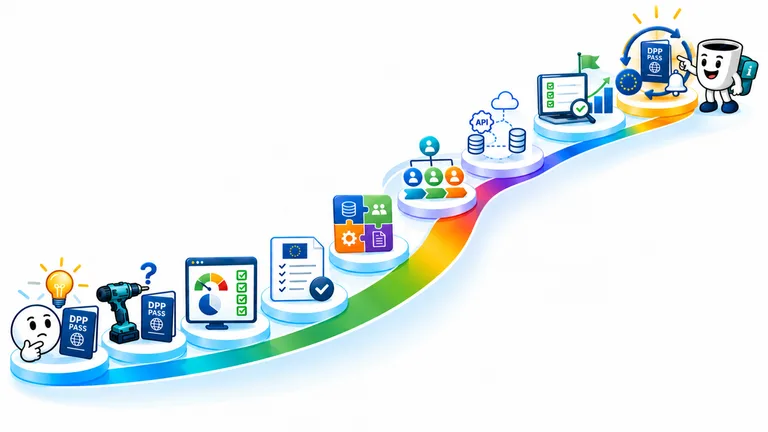
Implementation
What does a realistic DPP roadmap look like within your own company? Without a big bang
The Digital Product Passport does not begin with selecting software, but with clarifying products, information, responsibilities, and processes. This deep dive shows how companies can assess their DPP readiness, close gaps, and gradually prepare the technical provision and ongoing operation.
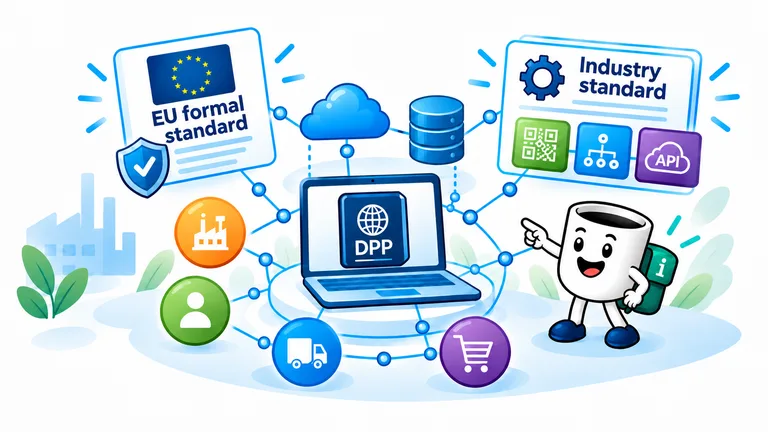
Formal standards
Formal standards and industry standards ensure that Digital Product Passports work across systems
Digital Product Passports must work across company, industry and system boundaries. This Deep Dive explains the role of European DPP formal standards and industry standards, how they work together and what they mean for companies implementing the Digital Product Passport.
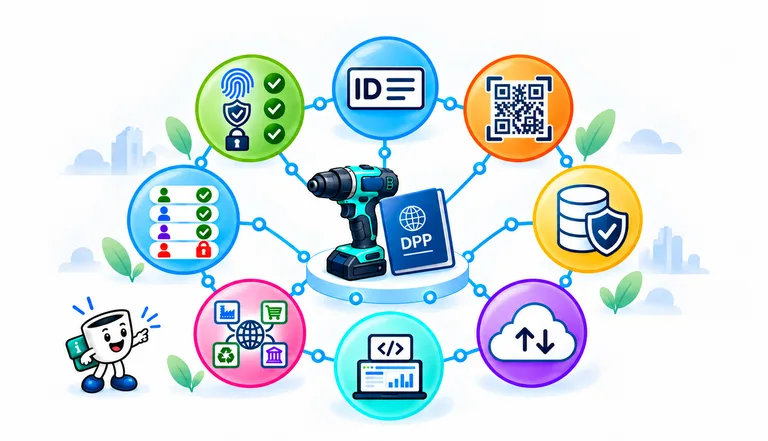
Technical specifications
The eight European DPP formal standards in detail
The eight European DPP standards establish the technical framework for the Digital Product Passport.
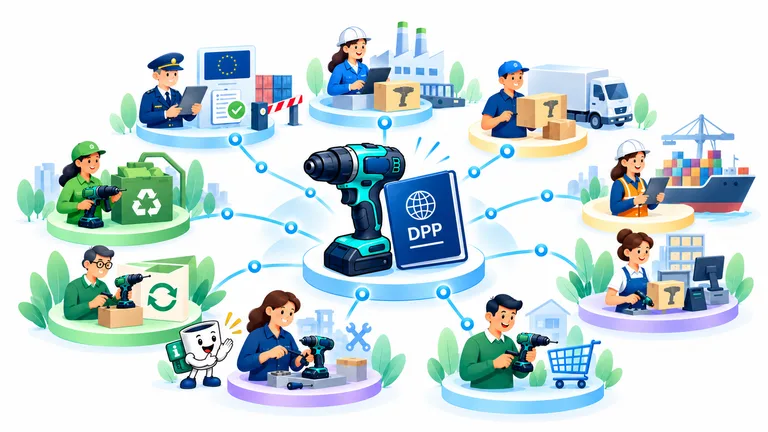
Implementation
What exactly are the roles of manufacturers, importers and other economic operators?
The ESPR assigns tasks and obligations relating to the Digital Product Passport to manufacturers, importers, distributors and authorised representatives. Other actors provide data, technical services or information from the use and end-of-life phases.