DeepDive
PLM, ERP, PIM, MES — where the DPP data really lives
In almost every DPP project, the question of "the DPP software" comes up early. It usually leads you astray. The Digital Product Passport is, first and foremost, a structured information space — the data for it largely already exists, just spread across systems, departments and suppliers.
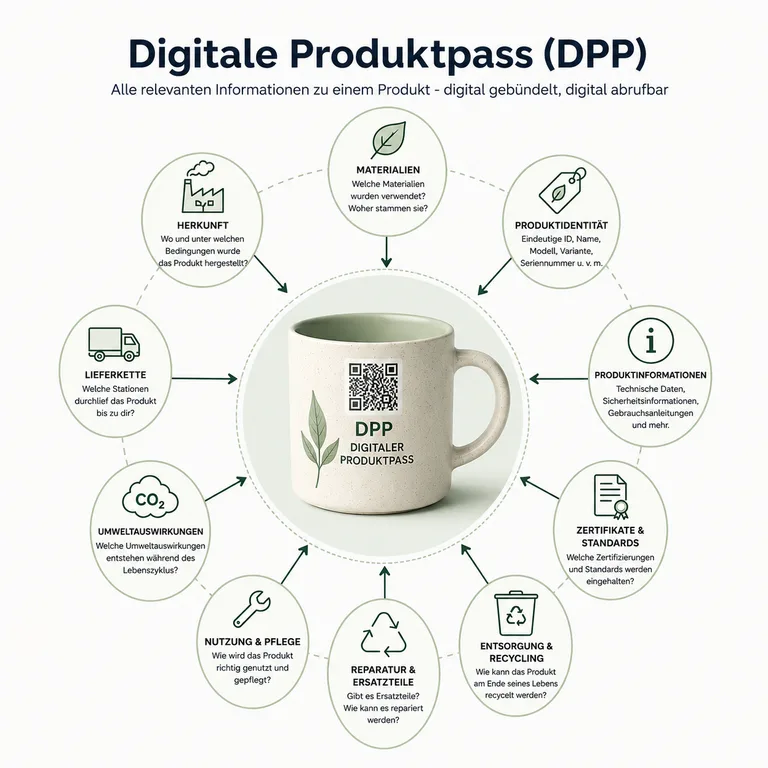
The typical system landscape
Where DPP-relevant information is usually located can be well sorted by lifecycle phase:
- PLM — design, bills of materials, materials, technical specifications, variants.
- ERP — master data, suppliers, batches, procurement, quantity structures.
- PIM — marketing-facing product information, texts, media, channel variants.
- MES — production and quality data, origin, process parameters, serial numbers.
- CRM/Service — repairs, maintenance, spare parts, service history from the usage phase.
The DPP isn't another silo
If the DPP is set up as a standalone system into which data is manually transferred, another silo is created with its own maintenance burden and its own rate of becoming outdated. The sustainable approach is the reverse: the DPP becomes a view onto the leading systems, with clearly defined data sources per field — one field, one leading system.
Integration patterns in practice
- Direct connection: The DPP pulls data from the leading systems via an interface. Lean, but sensitive to availability and load spikes.
- Data hub: An integration layer collects, harmonizes and feeds the DPP. More effort, but a clean place for mapping and data quality.
- DPP service provider: Storage, registration and provision are outsourced. Legal responsibility remains with the responsible economic operator.
The underestimated requirement: updatability
A DPP is not a snapshot at the moment of placing on the market. Information should be able to be added to and updated throughout the lifecycle — repairs, spare parts, reuse, recycling. This is less a technical question than a procedural one: who maintains what, when, with what approval? Anyone who only asks this question after choosing a system ends up building it twice.